Toiaa Taiao: Whiria ko te iwi tuna
28 Feb - 18 Jul 2026
He kaupapa nui a Whiria ko te iwi tuna naa te kaahui ringatoi e kiia ana ko Toiaa Taiao: ko Tihikura Hohaia (Ngaati Moeahu) raatou ko Alex Monteith (ko Clans Mitchell raatou ko Monteith ko Doherty) ko Maree Sheehan o ngaa iwi o Ngaati Maniapoto raatou ko Waikato ko Ngaati Tuuwharetoa ko Raukawa ko Ngaati Tahu-Ngaati Whaoa, o Clan Sheehan raaua Clan Marshall hoki.
Maa te whakarumaki i te tuku koorero paki aa-karu, aa-paaorooro e kitea ai ngaa ao o te papa moana o Te Whanganui-a manga i te rohe o Ngaati Moeahu, te tūtakitanga ki Te Moana Taapokopoko-a-Taawhaki i te moka taiuru o Taranaki. E aro ana ki te ngutuawa—te rau mita i te hikuwai o te manga, araa te huanga atu ki tai— koinei te tinana e rongo ana i ngaa papaatanga i hua mai i te taamitanga i te tukino whenua me te tukino wai moo te kotahi rau tau. Ko ngaa wai whai paakawa ota me ngaa para taaoke ka kawea e ngaa ia o te awa, kia tupu ai te puukohu wai me te otaota haaora, waihoki he whakaaweawe i te ora o ngaa taniwha me te ira tangata anoo hoki.
Ka tautaawhia te tini taangata e te reo o te manga, maa te whakaaturanga nei, maa Whiria ko te iwi tuna—he kapohanga noo te papamoana me ngaa iarere tee tino rangona e te aroaa tangata. Kua kapohia ngaa koiora e whai kaainga ana i te manga, araa ko hoo raatou aahua whanaketanga maha i te waa o te ora, ko te nuinga i te hanga ohinga, i a raatou e tupu ana i ngaa kano aa-rangi me te huringa o ngaa kaupeka o te tau. Ka piioioi te tuna me te piharau i te aataarangi, ka kautere te kooaro i ngaa aukaha poouriuri, me te aha ko taa te koura he aata whiikoi i te kirikiri.
Naa Rachel Buchanan, o ngaa iwi o Taranaki raatou ko Te Aatiawa, ko Taranaki Whaanui ki Te Upoko o Te Ika, teetehi whakahiinga tuhinga hei takoha ki hoona manuwhiri. Ka tuuhono te tuhinga a Buchanan i te mahi a ngaa ringatoi ki te “whakapapa o te manaakitanga me te porotuu” i roto o Taranaki, me te whakamaanawa hoki i te ngangaa o ngaa tini uki o ngaa hapuu me ngaa tikanga aa-hapori ki te tiaki i te wai i ngaa kino o te ahumahi, waihoki ka whakakoia te puumautanga o te wai ki te tangata o Taranaki
Whiria ko te iwi tuna is a major newly commissioned project by artist collective Toiaa Taiao: Tihikura Hohaia (Ngaati Moeahu), Alex Monteith (Clans Mitchell, Monteith & Doherty), and Maree Sheehan (Ngāti Maniapoto, Waikato, Ngāti Tuwharetoa, Raukawa, Ngāti Tahu- Ngāti Whaoa, Clan Sheehan, Clan Marshall).
Through immersive visual and sonic storytelling, the project gives form to the underwater lifeworlds of Te Whanganui—a manga in the rohe of Ngaati Moeahu, which meets Te Moana-Taapokopoko-a-Taawhaki near the western-most point of Taranaki. Focussing on the ngutuawa—the last 100-meters of the manga before it meets the sea—this body of water experiences the cumulative impacts of more than a century and a half of settler-colonial land and water mismanagement.
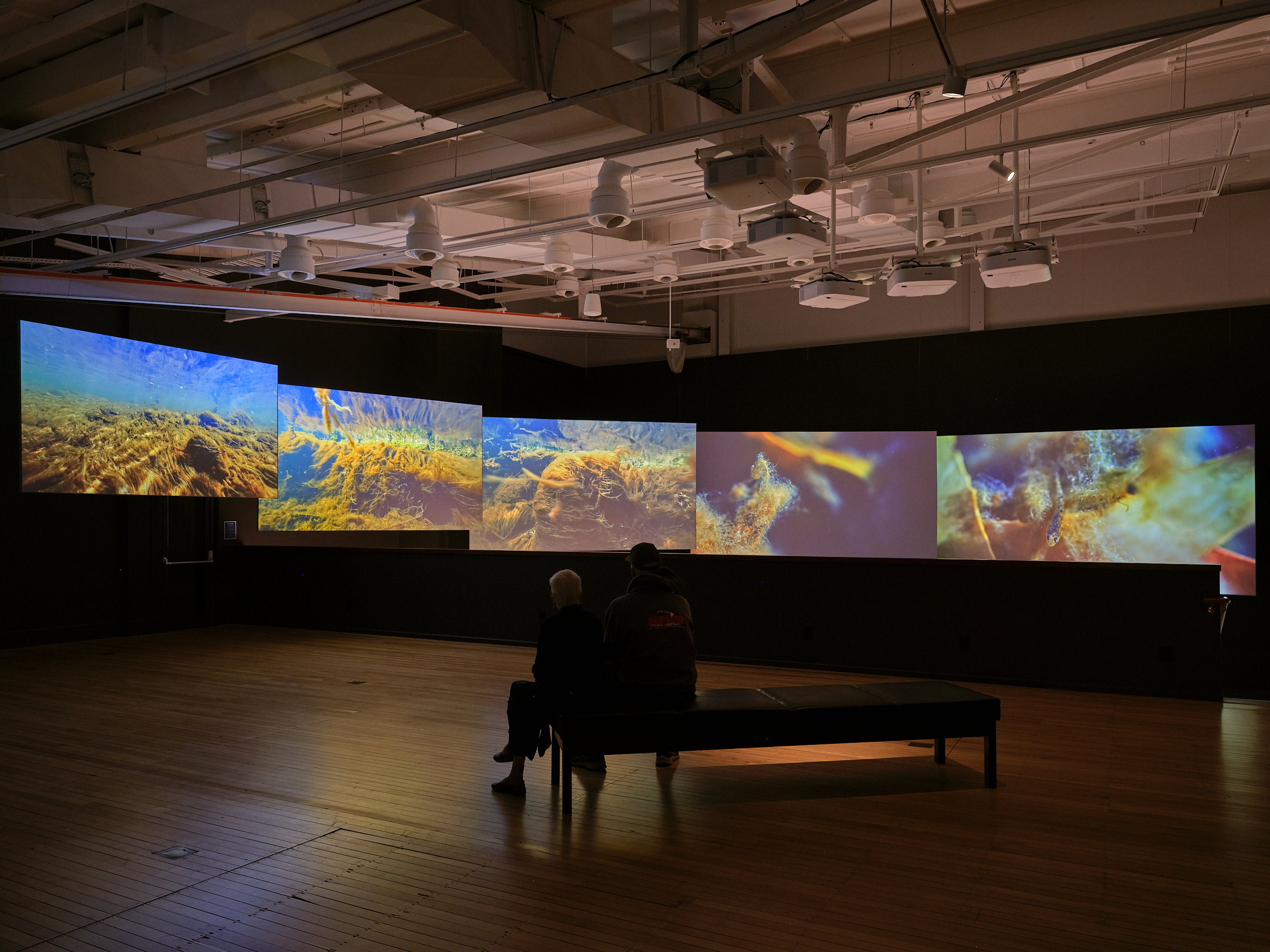
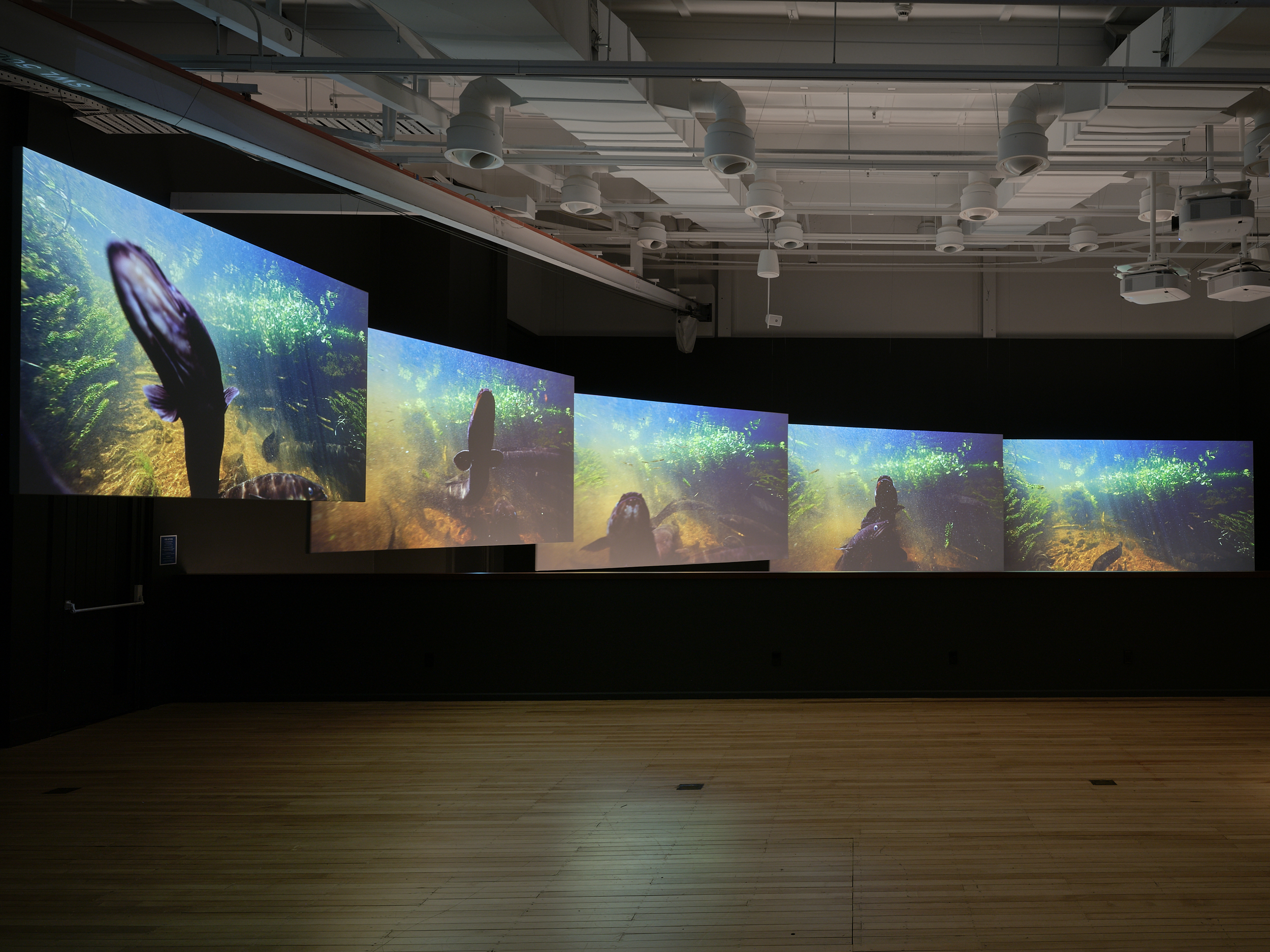
Within the environment of Whiria ko te iwi tuna, the voice of the manga embraces audiences—through underwater images and frequencies usually out of the realm of human comprehension. The beings who inhabit the manga are pictured at different stages of life, many in juvenile form, through varying weather patterns and seasonal changes. Tuna and piharau gliding in shadow, iinanga shimmering like silver threads, kooaro drifting through dark currents, and kooura moving quietly among stones. Through a soundscape composed from field recordings gathered over years, the listener is connected to ihirangaranga—the delicate vibrations and deep resonance of life which unfolds and ripples through water, stone, and non-human beings. Every sound, from the faintest shimmer to the deepest rumble, becomes part of an intimate chorus rising from beneath the surface, revealing the unseen state of Te Whanganui.
Seeking to develop an underwater poetics, the artists position themselves within a lineage of activism and change. The project foregrounds the impact of continuing legislative failures, which enable capitalist exploitation of land and waters, and undermine hapū authority in enacting kaitiakitanga.
Alongside the exhibition, a newly commissioned text by Rachel Buchanan (Taranaki iwi, Te Ātiawa, Taranaki Whānui ki Te Upoko o Te Ika) locates the project within “a whakapapa of care and protest” within Taranaki, honouring generations of hapuu and community-led efforts to protect waters from industrial ruin, and affirm the inseparable relations between Taranaki’s waters and its people.
-
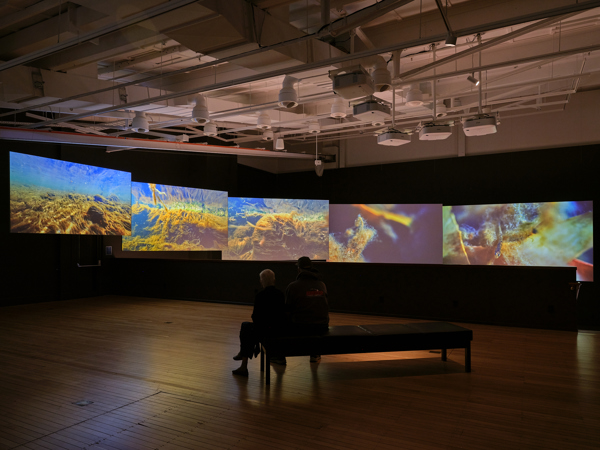
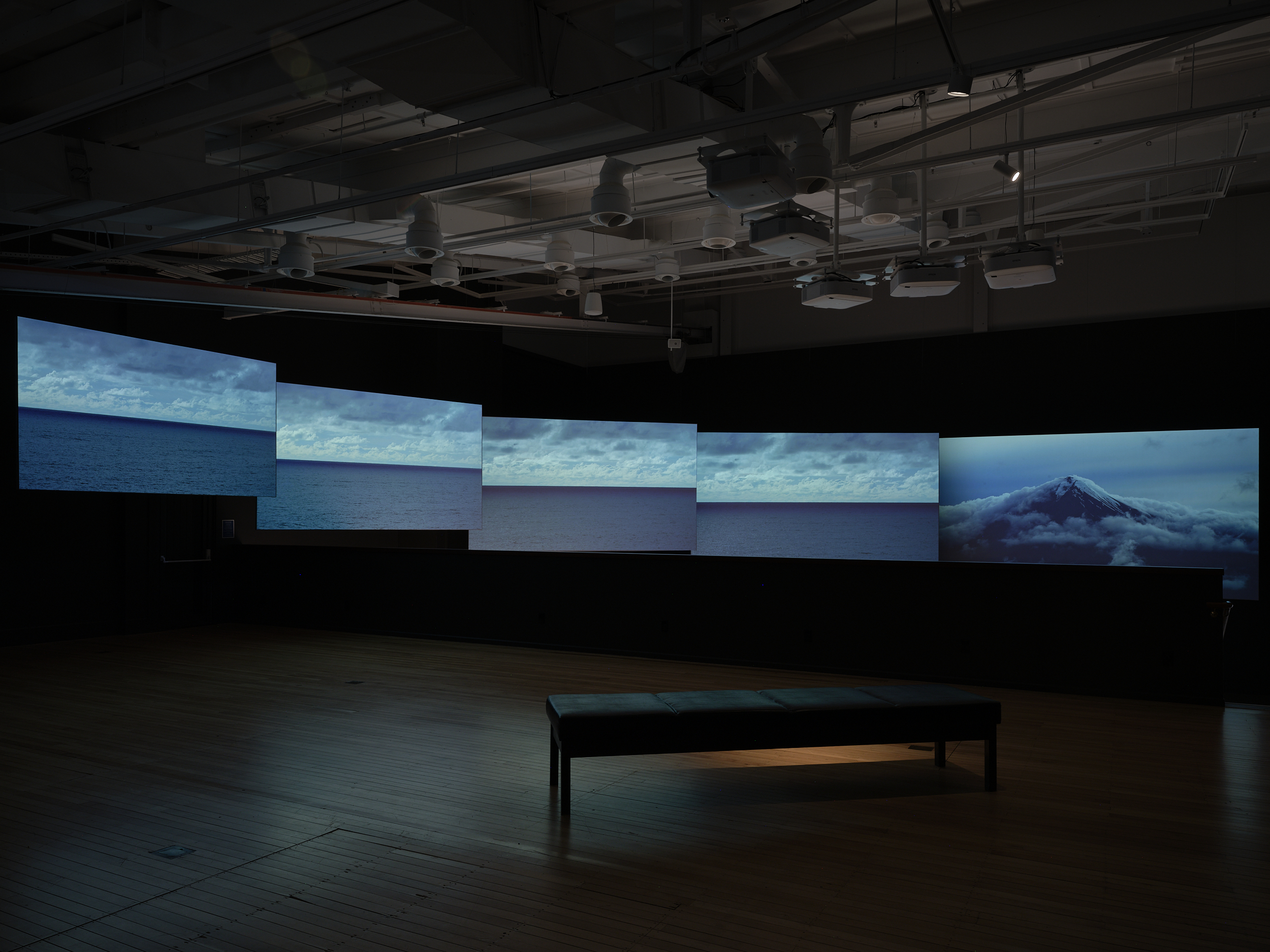
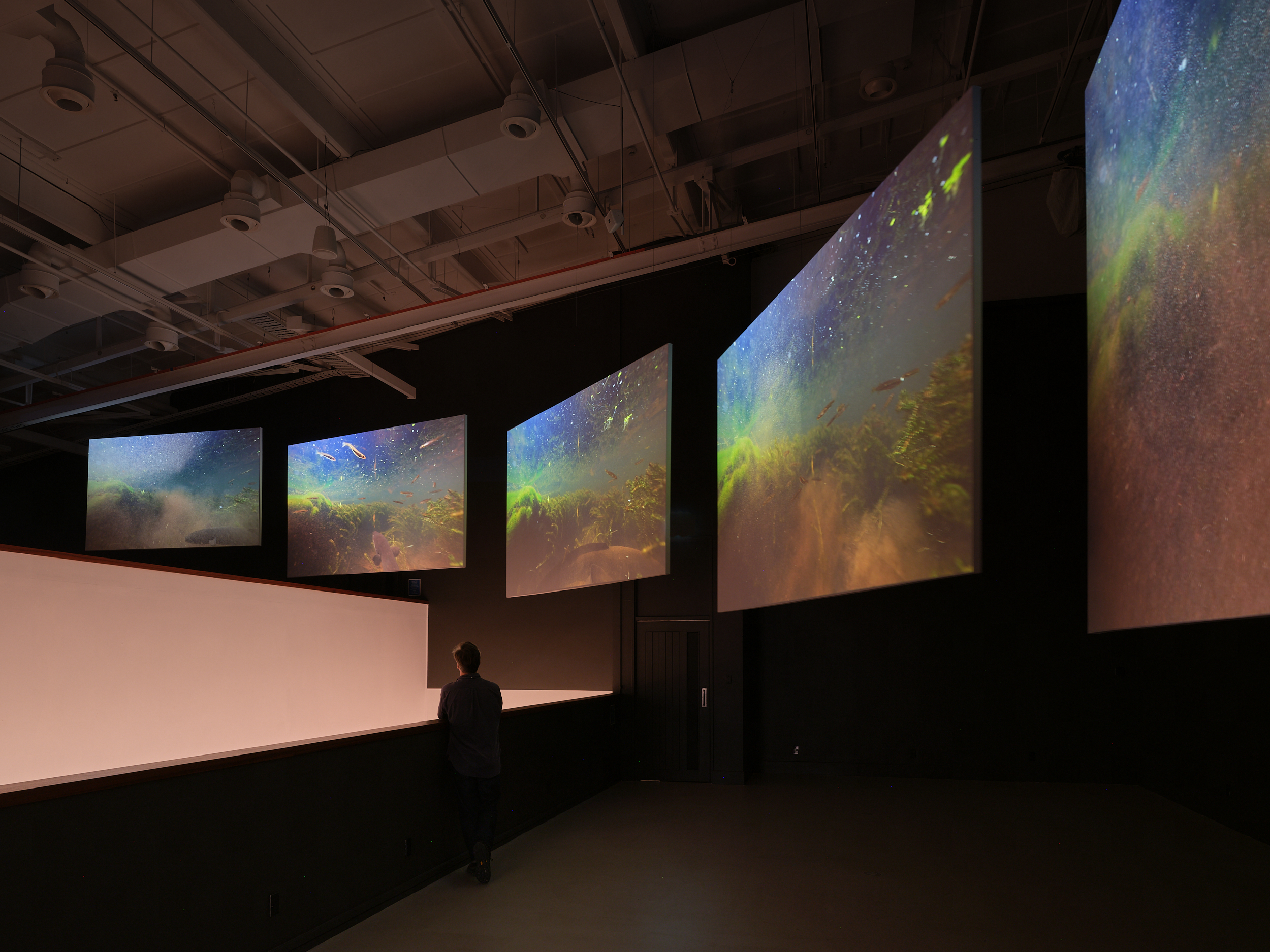
Toiaa Taiao, Whiria ko te iwi tuna, 2026, audiovisual installation comprised of five-channel synchronised projected video, variable dimensions, with an immersive seven-channel audio configuration, 15:00. installation view Govett-Brewster Art Gallery, Ngāmotu New Plymouth, 2026. Courtesy of the artists.
Photo: Samuel Hartnett.Toiaa Taiao, Whiria ko te iwi tuna, 2026, audiovisual installation comprised of five-channel synchronised projected video, variable dimensions, with an immersive seven-channel audio configuration, 15:00. installation view Govett-Brewster Art Gallery, Ngāmotu New Plymouth, 2026. Courtesy of the artists.
Photo: Samuel Hartnett. -

Pepi-Joy Gilgen, Te Huringa-o-te-tai aka Tuna girl, 2025, polyester taffeta, cotton, foam filling.
Courtesy of the artist.
Photo: Samuel HartnettPepi-Joy Gilgen, Te Huringa-o-te-tai aka Tuna girl, 2025, polyester taffeta, cotton, foam filling.
Courtesy of the artist.
Photo: Samuel Hartnett -

Toiaa Taiao, Whiria ko te iwi tuna, 2026, audiovisual installation comprised of five-channel synchronised projected video, variable dimensions, with an immersive seven-channel audio configuration, 15:00. installation view Govett-Brewster Art Gallery, Ngāmotu New Plymouth, 2026. Courtesy of the artists.
Photo: Samuel HartnettToiaa Taiao, Whiria ko te iwi tuna, 2026, audiovisual installation comprised of five-channel synchronised projected video, variable dimensions, with an immersive seven-channel audio configuration, 15:00. installation view Govett-Brewster Art Gallery, Ngāmotu New Plymouth, 2026. Courtesy of the artists.
Photo: Samuel Hartnett -

Toiaa Taiao, Whiria ko te iwi tuna, 2026, audiovisual installation comprised of five-channel synchronised projected video, variable dimensions, with an immersive seven-channel audio configuration, 15:00. installation view Govett-Brewster Art Gallery, Ngāmotu New Plymouth, 2026. Courtesy of the artists.
Photo: Samuel HartnettToiaa Taiao, Whiria ko te iwi tuna, 2026, audiovisual installation comprised of five-channel synchronised projected video, variable dimensions, with an immersive seven-channel audio configuration, 15:00. installation view Govett-Brewster Art Gallery, Ngāmotu New Plymouth, 2026. Courtesy of the artists.
Photo: Samuel Hartnett -

Toiaa Taiao, Whiria ko te iwi tuna, 2026, audiovisual installation comprised of five-channel synchronised projected video, variable dimensions, with an immersive seven-channel audio configuration, 15:00. installation view Govett-Brewster Art Gallery, Ngāmotu New Plymouth, 2026.
Courtesy of the artists.Toiaa Taiao, Whiria ko te iwi tuna, 2026, audiovisual installation comprised of five-channel synchronised projected video, variable dimensions, with an immersive seven-channel audio configuration, 15:00. installation view Govett-Brewster Art Gallery, Ngāmotu New Plymouth, 2026.
Courtesy of the artists. -

Toiaa Taiao, Whiria ko te iwi tuna, 2026, audiovisual installation comprised of five-channel synchronised projected video, variable dimensions, with an immersive seven-channel audio configuration, 15:00. installation view Govett-Brewster Art Gallery, Ngāmotu New Plymouth, 2026. Courtesy of the artists.
Photo: Samuel HartnettToiaa Taiao, Whiria ko te iwi tuna, 2026, audiovisual installation comprised of five-channel synchronised projected video, variable dimensions, with an immersive seven-channel audio configuration, 15:00. installation view Govett-Brewster Art Gallery, Ngāmotu New Plymouth, 2026. Courtesy of the artists.
Photo: Samuel Hartnett -

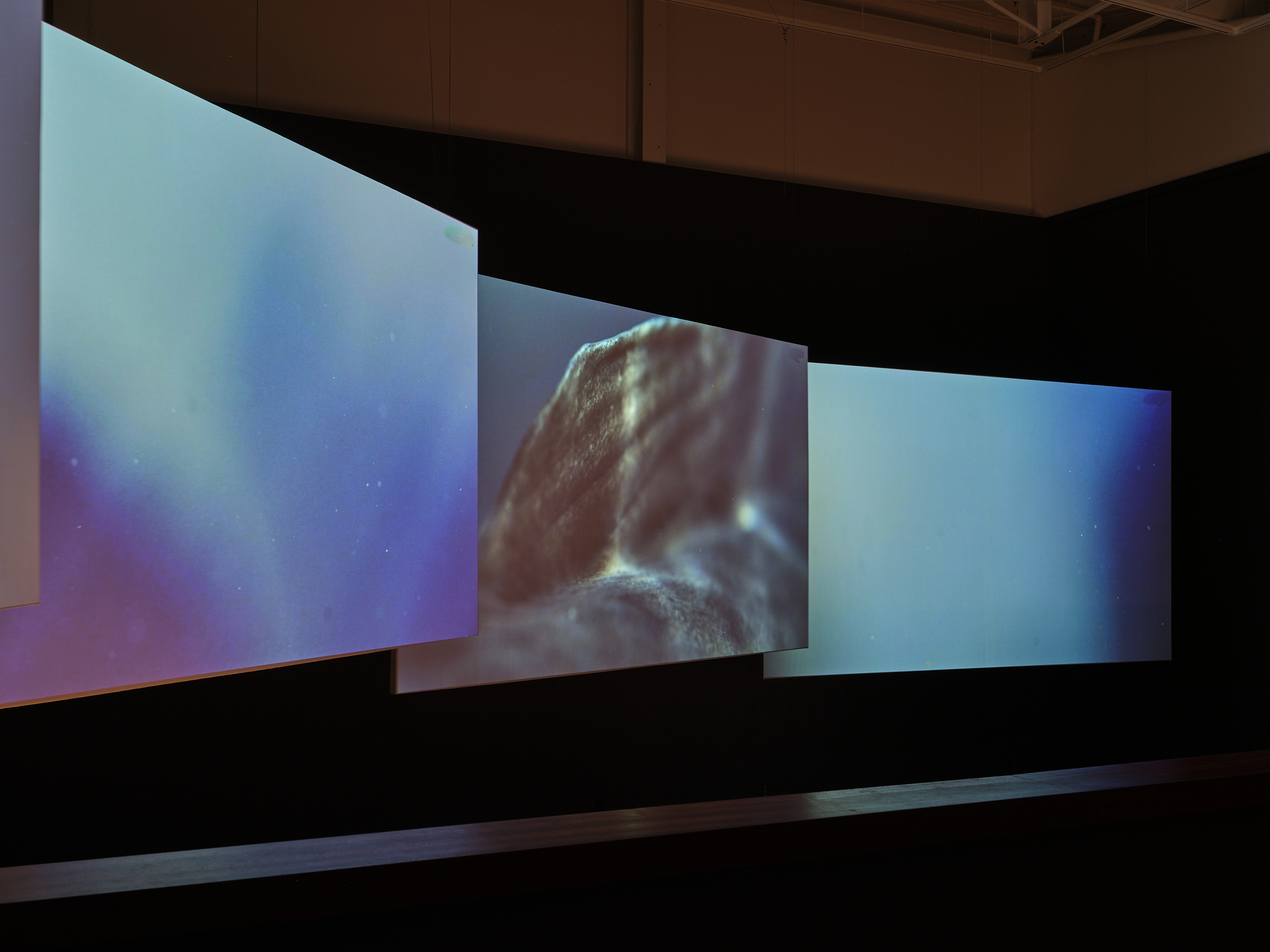
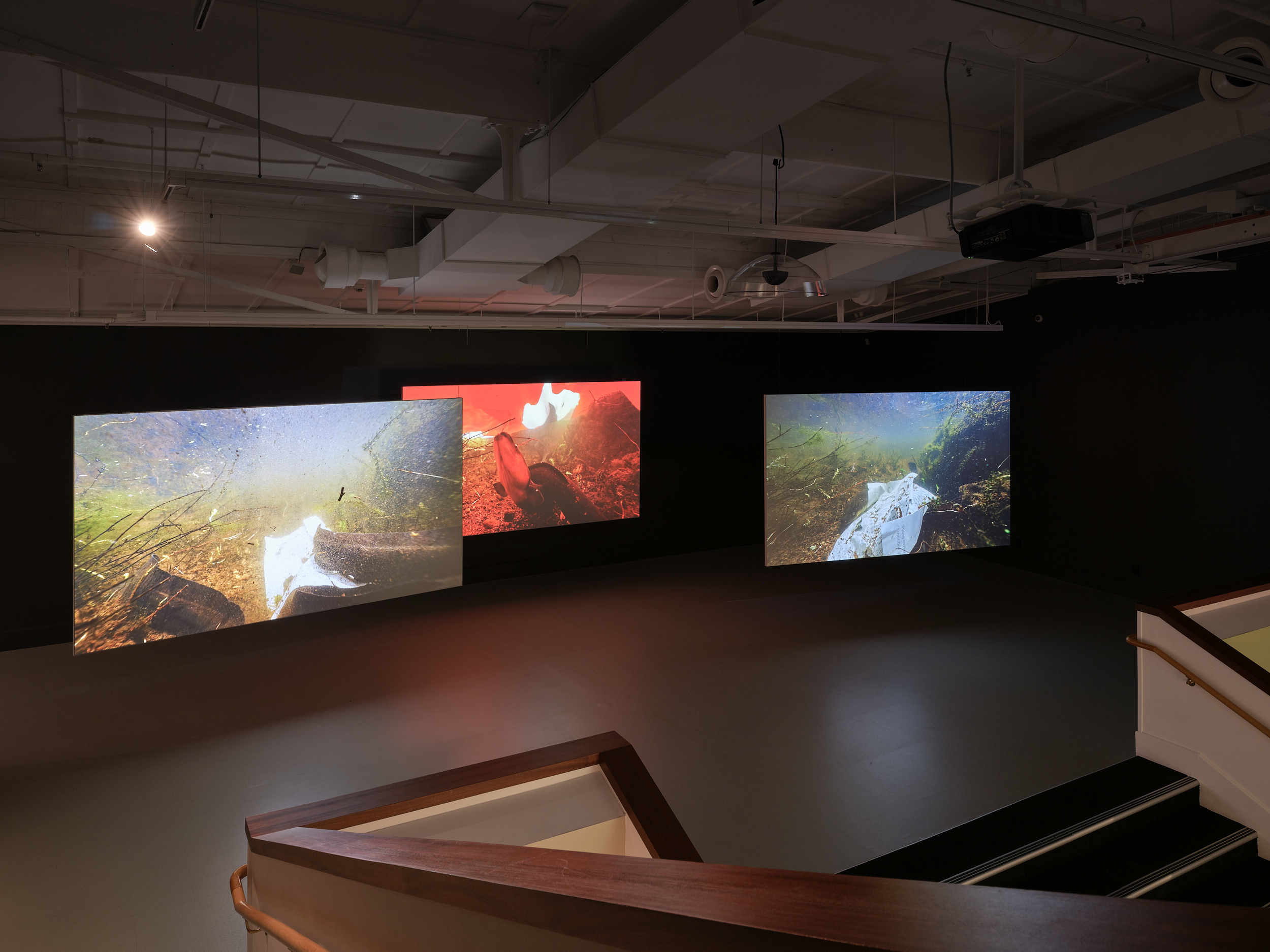
Left: Toiaa Taiao, Whiria ko te iwi tuna – Mana o Te Wai – Te Whanganui, 2026, Single channel video installation with stereo audio, 09:27; Centre: Toiaa Taiao, Whiria ko te iwi tuna – Tino Rangatiratanga – Te Whanganui, 2026, Single channel video installation with stereo audio, 03:41; Right: Whiria ko te iwi tuna – Taranaki Regional Council Regional Freshwater Plan for Taranaki – Te Whanganui, 2026, Single channel video installation with stereo audio, 09:27. Installation view, Govett-Brewster Art Gallery, Ngāmotu New Plymouth. Courtesy of the artists.
Photo: Samuel HartnettLeft: Toiaa Taiao, Whiria ko te iwi tuna – Mana o Te Wai – Te Whanganui, 2026, Single channel video installation with stereo audio, 09:27; Centre: Toiaa Taiao, Whiria ko te iwi tuna – Tino Rangatiratanga – Te Whanganui, 2026, Single channel video installation with stereo audio, 03:41; Right: Whiria ko te iwi tuna – Taranaki Regional Council Regional Freshwater Plan for Taranaki – Te Whanganui, 2026, Single channel video installation with stereo audio, 09:27. Installation view, Govett-Brewster Art Gallery, Ngāmotu New Plymouth. Courtesy of the artists.
Photo: Samuel Hartnett
Opening Day Programme:
Join artists Tihikura Hohaia, Alex Monteith and Maree Sheehan as they introduce their major new project Whiria ko te iwi tuna.
Together, the artists will speak to the development of their collaborative relationship and the process of gathering images and field recordings over many years; ongoing legislative failures which undermine efforts to enact kaitiakitanga; and the project’s ambition to amplify the submerged voices of the beings who inhabit this manga, thereby recognising their sovereignty.
Through immersive visual and sonic storytelling, Whiria ko te iwi tuna gives form to the underwater lifeworlds of Te Whanganui—a manga in the rohe of Ngāti Moeahu, which meets Te Moana-taapokopoko-a-Tāwhaki near the western-most point of Taranaki. Focussing on the ngutuawa—the last 100-meters of the manga before it meets the sea—this body of water experiences the cumulative impacts of more than a century and a half of settler-colonial land and water mismanagement.
Ongoing Programming:
Immersive Listening with Whiria ko te iwi tuna
Thu 04 Jun | Thu 18 Jun | Thu 02 Jul | Thu 16 Jul
5:30pm - 6:00pm
This special immersive listening experience invites you into the sonic and submerged world of Whiria ko te iwi tuna, a major newly commissioned project by artist collective ToiaaTaiao (Tihikura Hohaia, Alex Monteith, Maree Sheehan). This amplified offering opens a space to slow down, attune, and listen beneath the surface.
Through immersive visual and sonic storytelling, the project gives form to the underwater lifeworlds of Te Whanganui—a manga within the rohe of Ngaati Moeahu, meeting Te Moana-Taapokopoko-a-Taawhaki near the western-most point of Taranaki. Focussing on the ngutuawa—the final stretch before the river meets the sea—this environment carries the cumulative impacts of more than a century of settler-colonial land and water mismanagement.
Within this space, the voice of the manga embraces audiences through underwater images and frequencies beyond typical human perception. Tuna and piharau glide in shadow, iinanga shimmer like silver threads, kooaro drift through dark currents, and kōura move quietly among stones.
The soundscape—composed from field recordings gathered over years—connects listeners to ihirangaranga: the delicate vibrations and deep resonance of life unfolding through water, stone, and more-than-human beings. Each sound, from the faintest shimmer to the deepest rumble, forms part of an intimate chorus rising from beneath the surface.
Seeking to develop an underwater poetics, the artists position the work within a lineage of activism and change, foregrounding ongoing legislative failure and the undermining of hapū authority in enacting kaitiakitanga.
Settle in. Get comfortable. Bring a yoga mat, a blanket, and warm clothes.
Pāo o te Manga: A Māori Sound Night
Thu 11 Jun | 6:30pm - 8:30pm
An evening activation of Toiaa Taiao: Whiria ko te iwi tuna
As part of Whiria ko te iwi tuna, the gallery will host an intimate Māori sound night grounded in pāo, wai, and deep listening, responding to the underwater lifeworlds of Te Whanganui.
For one‑night only this special activation will bring together Māori artists working with voice, rhythm, breath, and vibration—echoing the pulsing currents, frequencies, and unseen movements of the manga. Pāo operates as both sound and signal: calling across water, whakapapa, and time, and activating the gallery as a shared space of listening and connection.
Moving across music, ambient sound, and live performance, the evening reflects on kaitiakitanga, environmental change, and the enduring relationship between people and wai. Like the exhibition itself, Pāo o te Manga invites audiences to slow down and attune to what is usually unheard—where sound becomes a form of care.
Please note that spaces are limited and offered on a first-come, first-served basis.
We encourage you to arrive early to avoid missing out.

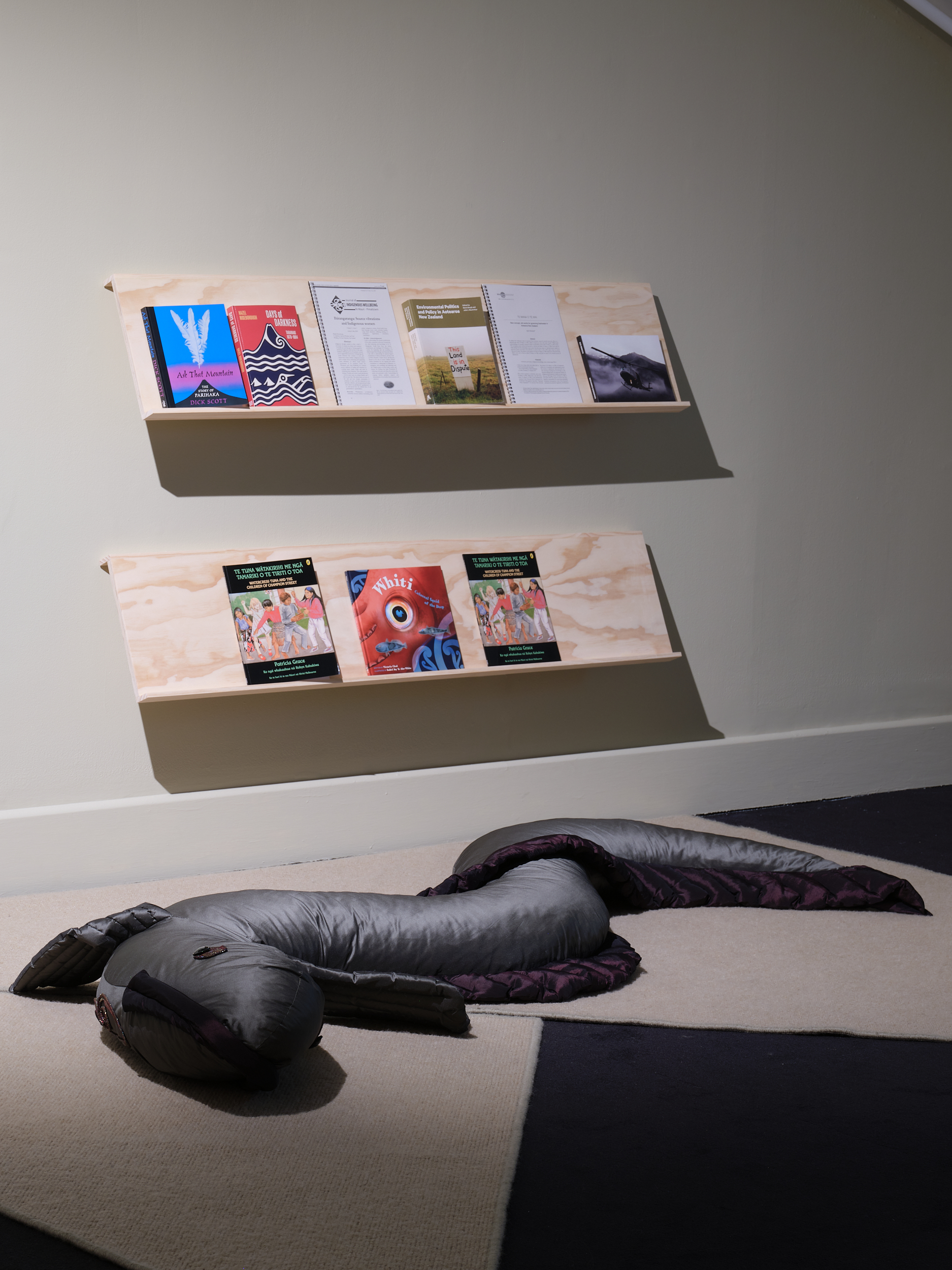
Pepi-Joy Gilgen, Te Huringa-o-te-tai aka Tuna girl, 2025, polyester taffeta, cotton, foam filling.
Courtesy of the artist. Photo: Samuel Hartnett.
Alongside Whiria ko te iwi tuna, Pepi Joy-Gilgen's Te Huringa-o-te-tai aka Tuna girl joins us, acting as an invitation to tamariki to explore the values of manaakitanga and kaitiakitanga. Through engaging with Gilgen's interactive sculpture, visitors are encouraged to consider reciprocity—koha atu, koha mai—and reflect on how practising these values allows our taiao to flourish.
The development of Whiria ko te iwi tuna has been supported by Creative New Zealand Toi Aotearoa, Elam School of Fine Arts, Waipapa Taumata Rau | University of Auckland, and Te Manawahoukura Research Centre, Te Wānanga o Aotearoa.